Aston Resources
From Maules Creek development to a A$400 million IPO, then a merger Reuters reported at approximately US$3 billion — externally verifiable scale, and what it taught me about judgement when momentum becomes its own force.
Aston Resources wasn’t my company — it belonged to Nathan Tinkler, who in 2008 bought the Maules Creek coal deposit in New South Wales from Rio Tinto for $480 million, before the financing was even fully in place. I was CTO from the day the company existed. There was no company before that — no systems, no infrastructure, nothing. We built the entire technology stack from scratch in a matter of months, because the mine couldn’t wait for it.
Everything about it could have gone wrong. It was a brand-new company, built from zero, at speed, while the real work of finding $480 million was still happening around us. We were constantly running just to get the mine operational. That meant technology in the usual sense — but it also meant getting fibre lines installed to a site that had none, putting up mobile phone towers, and rolling out infrastructure most people never think to associate with "IT." Part of it meant building two custom mine-planning computers — $24,000 each, purpose-built, nothing like them existed off the shelf — to 3D map the mine and the resources sitting inside it.
The deal-making was never my job. Nathan built Aston, secured the funding, took it through an IPO that valued the company at $1.2 billion, and later merged it with Whitehaven Coal in a deal that created a company worth more than $5 billion. My job was making sure the technology and innovation underneath all of that actually worked — because a mine can’t run on a spreadsheet and a handshake.
When the merger closed, we transferred the assets and I moved on. I already had other businesses and organisations to work with — Aston was one chapter, not the whole story.
The situation
Aston Resources was not a small bet on coal. It was a development story — Maules Creek in New South Wales — moving through financing, construction, and public markets while capital, regulators, shareholders, and operational reality all moved at once.
In August 2010 Aston listed with a A$400 million IPO. Over the following year the company raised debt, brought in ITOCHU as a strategic investor, and scaled toward production at Maules Creek while the share price and shareholder expectations reflected one of the strongest returns on the ASX.
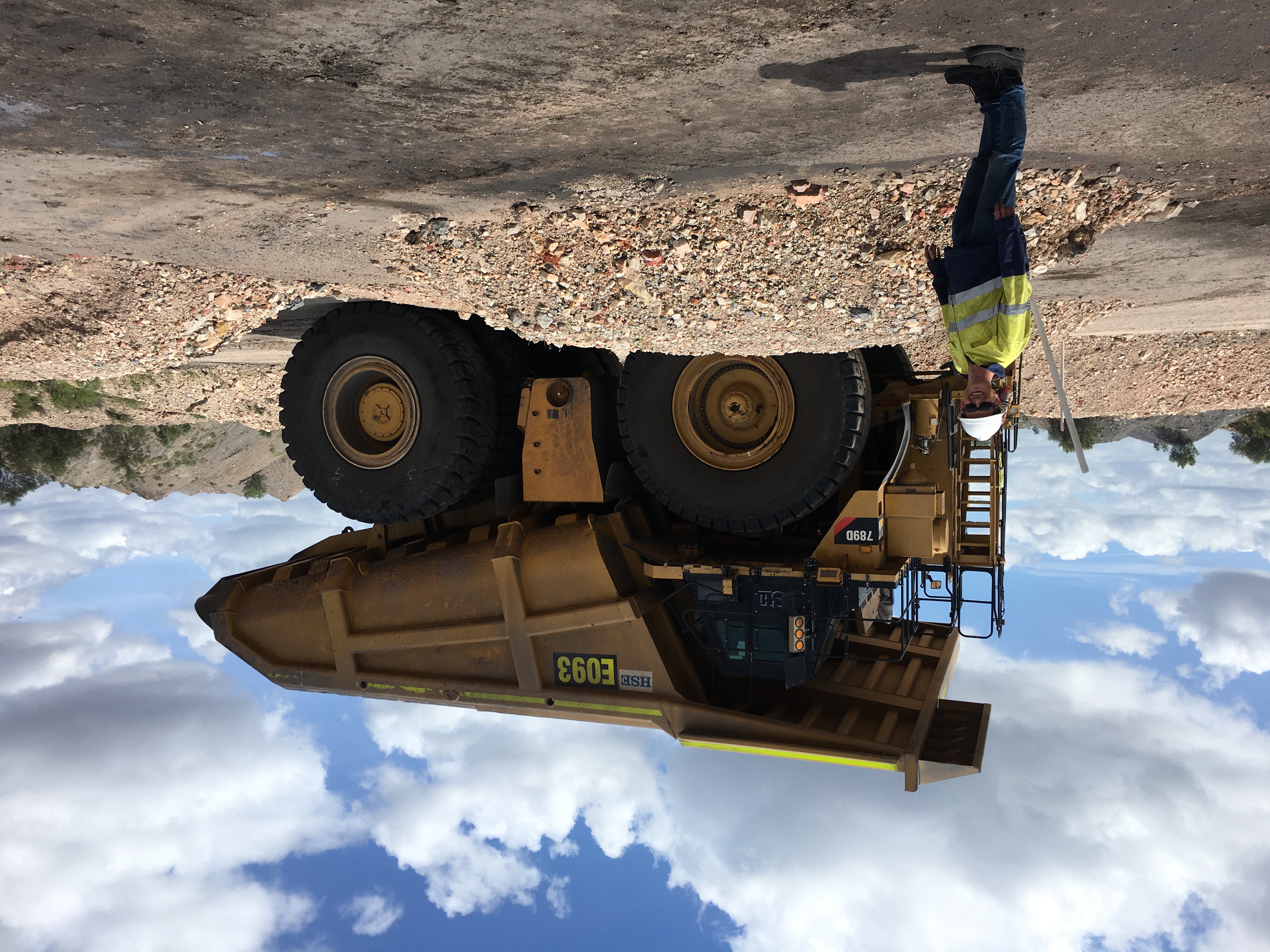
Standing on a mine site in Queensland — haul trucks, dust, operational noise — you see a different company than the one in a board pack. At Aston, that gap between deck and ground was the work.
What was actually being decided
At public-company scale, most conversations sound like they are about projects, timelines, or financing structures. Often they are really about momentum — whether the organisation can name what is being decided before the market, the calendar, or the board decides for it.
The October 2011 AGM material shows the company in motion: Maules Creek timeline, a A$350 million debt facility, ITOCHU’s role, and a 67.2% total shareholder return over twelve months. That is not a slide deck. It is a company where every month amplified both clarity and confusion.
By December 2011 Whitehaven Coal agreed to acquire Aston in a deal Reuters reported at approximately US$3 billion — creating what was then described as Australia’s largest independent coal miner. The merger was not an abstract transaction. It was the consequence of hundreds of earlier decisions made under pressure.
My role
I was CTO of Aston Resources and led all innovation work — inside a company moving from development and IPO through capital structure, merger dynamics, and operational scale at Maules Creek.
The value was not generic “mining experience.” It was being in the room when consequences were real — capital, operations, public scrutiny, and decisions that could not be unwound cleanly if they were wrong.
What it proved
Scale amplifies judgement. It does not replace it. The quality of a decision depends on naming what is actually being decided before momentum decides for you — and most people only discover which kind of clarity they had in hindsight.
That pattern — difficult systems, high stakes, conventional thinking lagging reality — is the same reason I ended up in sport, manufacturing, PNG, and finance. The industry changes. The mechanics do not.
Timeline
- 2009–2010
- Maules Creek development and path toward public markets.
- August 2010
- A$400 million initial public offering on the ASX.
- 2010–2011
- ITOCHU investment, debt financing, and operational scale at Maules Creek.
- October 2011
- AGM — A$350m debt facility, Maules Creek timeline, 67.2% total shareholder return over twelve months.
- December 2011
- Merger with Whitehaven Coal announced — Reuters reported approximately US$3 billion.
My role
CTO of Aston Resources — all innovation work on the journey from development and IPO through capital structure, merger dynamics, and decisions made at public-company scale.
What I learned
Scale amplifies every weakness.
At that scale, momentum becomes its own force. The quality of judgement depends on naming what is actually being decided before the market, the board, or the calendar decides for you. Scale amplifies both clarity and confusion — and most people only discover which one they had in hindsight.
Public record
I accept a limited number of advisory engagements each year. Most begin through referrals or direct introductions.